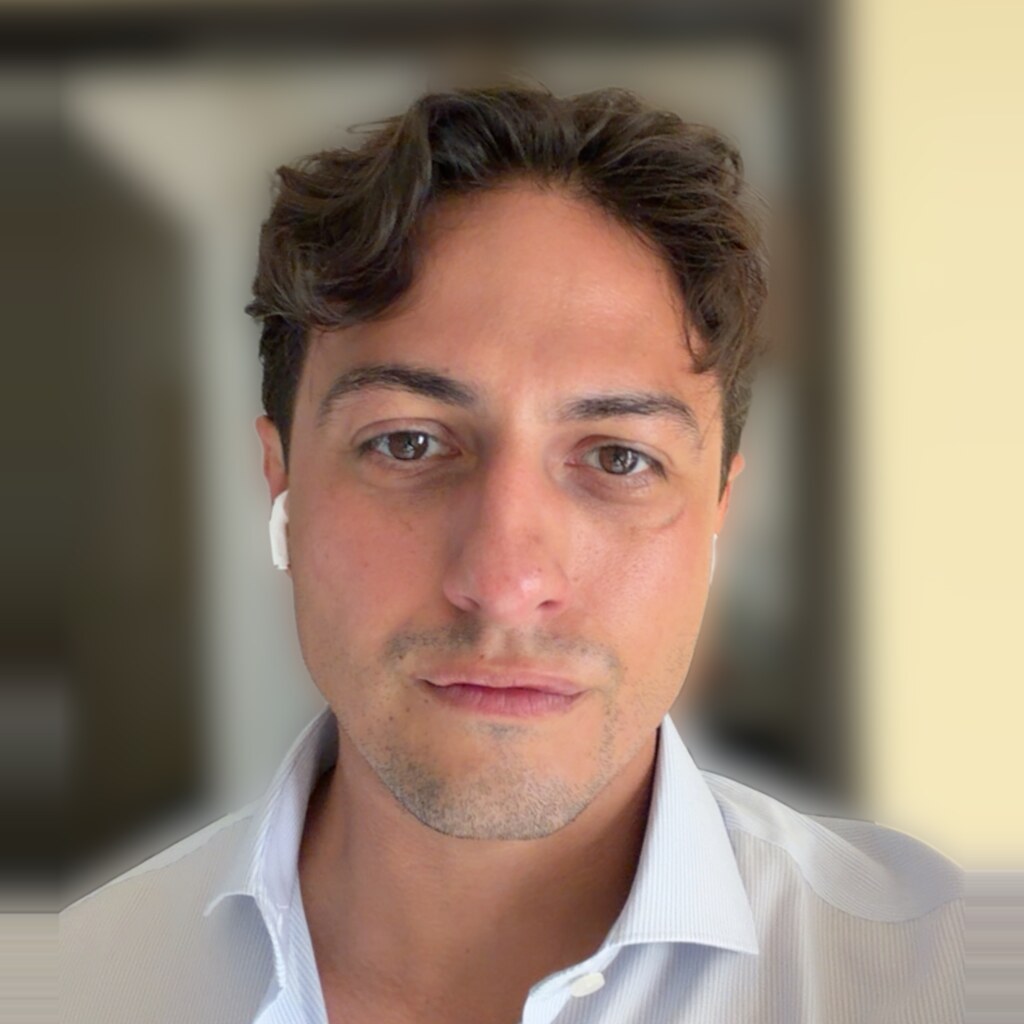
 Samario TorresFounder · SplitClub · Miami
I did not set out to build a yacht club. I set out to solve something that kept happening to me personally, in city after city, and the club is just the shape the answer took.
The problem started while I was travelling
I travelled a lot. And the more I travelled, the more obvious it became that I was seeing far less of each place than was actually on offer. Every city I landed in had remarkable things happening in it — the right day on the water, the right table, the right room — and I kept arriving next to them rather than inside them.
The events themselves were never the constraint. They existed. The constraint was that they were not flexible. To get into most of them you had to already be part of something: a group that had booked months ago, a friend who happened to know the host, a whole boat you were expected to charter and then fill yourself. If you were one or two people arriving into a city with an open week, there was almost nothing built for you. You either committed to the entire thing on your own, or you did not go.
So I did not go. Repeatedly. And that gap — wanting to experience more and meet more people, and being blocked by structures that only worked for groups who had already formed — is the thing SplitClub was built to remove.
The boat was never the hard part. The room was.
Samario Torres, Founder
The same problem, seen from the dock
Once I started paying attention to it from the other side, the picture got much sharper — and much more fixable.
Look at any marina on a good day. Boats are going out under capacity, constantly. A twelve-seat vessel leaves with five people on it. Another sits at the dock entirely because the group that wanted it could not get to a full number in time. The operator has already paid for the crew, the fuel and the slip. That empty capacity is not a small inefficiency; it is the single largest loss in the business, and it evaporates the moment the boat pulls away.
So on one side of the dock I had people who wanted to be on the water and could not get onto it. On the other side I had unfilled capacity that nobody could recover. Those are not two problems. That is one problem with a matching layer missing from the middle.
And a matching layer is software. That part I actually know how to build.
Why it became a piece of software
By trade I am an Applied AI Engineer working in fintech, where I design and ship production systems end to end. Which is to say: the day I understood that unfilled yacht capacity was fundamentally an allocation and scheduling problem, it stopped being an observation and became a spec.
What the software has to do is not complicated to describe, and it is the whole product:
- Price the day whole, then divide it by the places. Nobody should have to charter a boat to get on a boat.
- Let a member claim one place. Not a deck. Not a weekend. One place, on one day, that they chose.
- Hold the money until the deck is full. Funds sit in escrow through our state-of-the-art payment processing system and the day only sails once every place is funded. If it does not fill, it does not sail and nobody is charged. That single rule removes the organizer, the fronted deposit and the group chat all at once.
- Give the operator a full boat instead of a half-empty one. They get a vetted group arriving as a complete deck, on a day that was funded before anyone left the dock.
That is the entire mechanic. Any unfilled capacity across yachts, managed by a piece of software that is genuinely easy to use. Everything else the club does sits on top of it.
But the seats were only half of it
If SplitClub were only about splitting cost, it would be a payments feature and not a club. The reason it is a club is the second half of the problem, which is harder and which I care about more.
I kept seeing remarkable events across this city, and how well they would combine if someone put them together properly. That was never the constraint. The constraint was finding people who know how to have a genuinely good time and know how to do serious business. Most rooms give you one or the other.
Samario Torres, Founder
Splitting the cost is what makes a curated day reachable. Vetting the group is what makes it worth attending. Once cost is spread across a deck, the barrier to entry stops being the size of the cheque — and it can become the application instead. That trade is deliberate, and it is the most important design decision in the company. Price is a bad filter. It selects for people who can afford the day, which is not the same as people who make it good.
So every SplitClub application is reviewed. The guest list is the product.
Why Miami first, and why not eleven cities at once
The problem I described is international by nature — it is exactly what happens to you when you travel, and it happens in Saint-Tropez and Mykonos and Dubai as reliably as it happens in Miami. The city list in the app reflects where the club is going: eleven harbors, chosen because they are where this model has the most obvious reason to exist.
But I would rather be the best club in one city than a thin presence in six. So Miami is the live city — curated days, real places, real members — and the other ten open on operators, not on announcements. Until a harbor sails, it's where we're looking next, not a city we're live in.
When a harbor is open, we will say it is open. Until then the status is published plainly, city by city, in our harbor-by-harbor status. I would rather under-promise on the map than have a member fly somewhere on the strength of a flag on a website.
What I am actually building for
SplitClub is a one-person company. I built the club and its iOS app out of Miami, and I lead product, membership and curation. It is the first thing I have built for a room I wanted to be in myself, which turns out to be a very good constraint — every decision has an obvious test attached to it.
I intend to live with as much fun as I can while becoming a better person every day. I have never believed those two things are in tension. SplitClub is built for people who feel the same way, and I built it because I wanted somewhere to put them.
Samario Torres, Founder
If that is your standard too, the door is an application in the app. It is reviewed by a person. I would like you on the boat.
Keep reading
About SplitClub
SplitClub is the operating system for real-world experiences. In the SplitClub app, people discover things to do, create a split, invite their people, split the cost and go together. It was founded in 2026 by Samario Torres, is headquartered in Miami, is live in nine US cities and is available on iOS. More at splitclubapp.com/about.
Contact
| The app | Get the SplitClub iOS app |
|---|---|
| Operators | business@splitclubapp.com |
| Press | press@splitclubapp.com · Media resources |
A first-person essay by SplitClub's founder, published by SplitClub. It is company communication, not independent editorial coverage.